Preserving Heritage While Delivering Modern Drainage Solutions
Working within historic church grounds requires a careful balance of engineering expertise, respect for heritage, and sensitivity to the surrounding environment. Our recent project at All Saints Church in Cottenham presented exactly that challenge.
The works involved installing a new drainage system from inside the church, through the main entrance, and across part of the churchyard. Due to the age and historical significance of the site, every stage of the project had to be carried out with precision and care, particularly where excavation works passed through sections of the graveyard.
About All Saints Church, Cottenham
All Saints Church is one of the most prominent historic buildings in the Cambridgeshire village of Cottenham. The village itself has Saxon origins and was recorded in early medieval records as far back as the 11th century.
The church has stood at the heart of the community for centuries, with origins believed to date back to the 11th century and much of the current structure developed during the 13th and 14th centuries. Like many historic fenland churches, All Saints reflects the prosperity of the village during the 14th and 15th centuries, when significant rebuilding and expansion took place.
The church is particularly well known for its impressive scale and distinctive tower base, which remains from what was once believed to have been a much grander medieval tower structure. Over the years, the building has undergone restoration and repair work to preserve its role as both a place of worship and a focal point for the local community.
Today, the church continues to serve Cottenham while also facing the practical challenges that come with maintaining a historic building.
The Challenge
The project formed part of wider improvement works to facilitate the installation of new toilet and washroom facilities, along with the implementation of a kitchen within the church.
To support these upgrades, we installed new mains water connections alongside grey waste and foul drainage systems. The works required a carefully planned drainage route that would protect the building while delivering modern functionality within a historic setting.
The proposed route for the new drainage system ran from inside the church, through the main entrance, and into the surrounding grounds. However, the route crossed part of the historic graveyard, requiring an extremely sensitive excavation process.
As a Grade I listed building, every stage of the project had to be completed with extreme care and attention to detail. All works were carried out under the supervision of an archaeologist to ensure the historic significance of the site was fully protected throughout the excavation process.
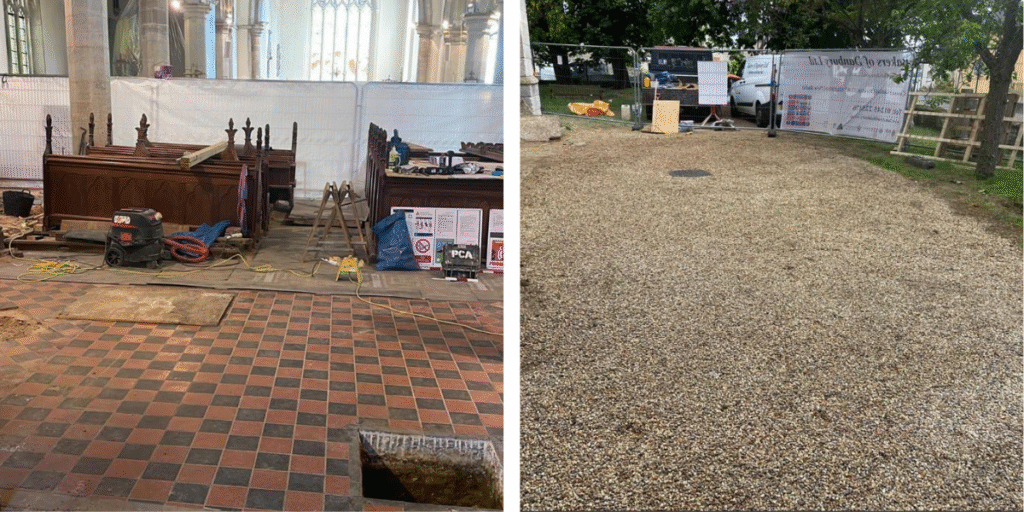
Working in active and historic burial grounds introduces a number of complexities:
- Protecting archaeological and historical integrity
- Avoiding disturbance to existing burials
- Working within confined and restricted access areas
- Minimising disruption to church activities and visitors
- Maintaining strict health, safety, and heritage compliance
Careful planning and coordination were essential before any ground was broken.
A Sensitive Excavation Process
Given the location of the trench route, the excavation works were carried out with exceptional care.
Before works commenced, the route was carefully assessed and agreed to minimise disturbance within the churchyard. Excavation depths and trench locations were controlled throughout the project, and all works were completed with a respectful approach appropriate to the historic setting.
Where the trench passed through burial areas, excavation was undertaken cautiously to ensure that no human remains were disturbed. The team worked methodically throughout the process, adapting techniques where required to safely navigate the conditions beneath ground level.
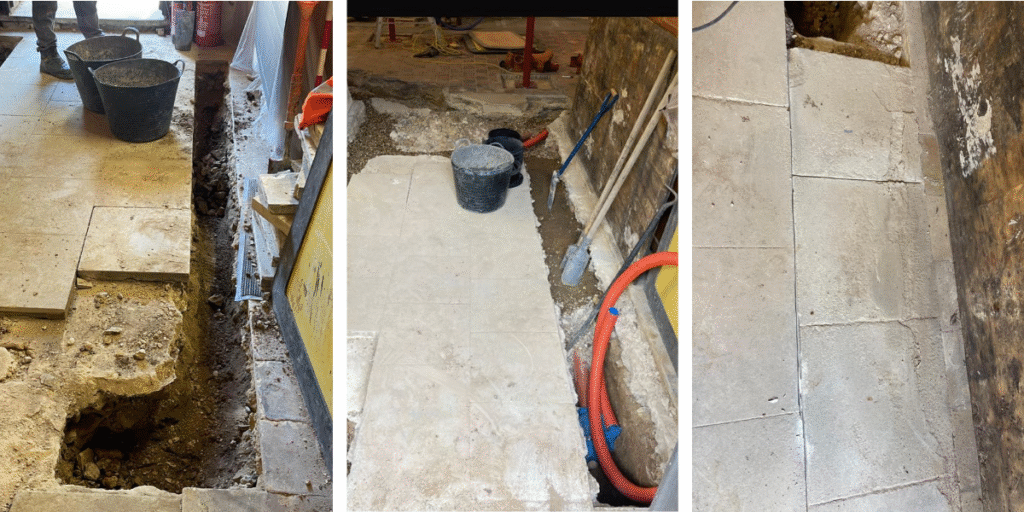
The confined access through the church entrance also required specialist planning and sequencing. Materials and equipment had to be managed carefully to protect the historic fabric of the building while allowing the drainage installation to progress efficiently.
Delivering the New Drainage System
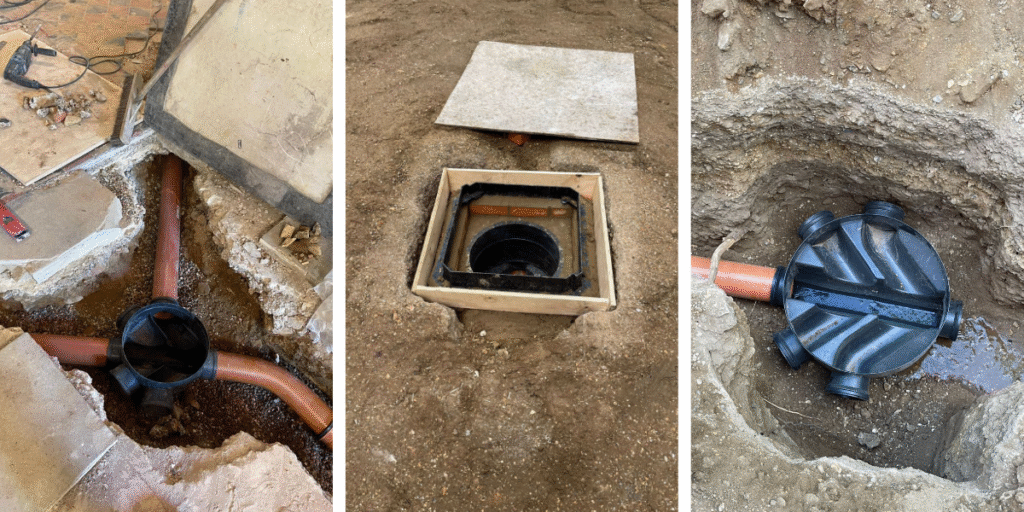
Once excavation works were complete, the new drainage infrastructure was installed to provide a reliable and long-term solution for the church.
The system now allows improved water management from within the building and helps safeguard the church against future drainage-related issues.
Following installation, all affected external areas were reinstated sympathetically to preserve the appearance and character of the church grounds. Particular care was taken to ensure everything was returned to its original condition without damaging the surrounding historic fabric or churchyard environment.
Working Within Historic Environments
Projects such as this demonstrate the importance of combining technical capability with respect for heritage environments.
Historic churches present unique challenges that require:
- Careful logistical planning
- Experience working within listed and sensitive sites
- Skilled excavation and reinstatement methods
- Strong communication with stakeholders and church representatives
- A professional and respectful approach at all times
We are proud to have delivered this project successfully while helping preserve an important part of Cottenham’s history for future generations.
Looking Ahead
Maintaining historic buildings often requires modern infrastructure improvements to ensure they remain functional and protected for years to come.
This project at All Saints Church highlights how specialist groundworks and drainage solutions can be delivered successfully even within highly sensitive historic locations.
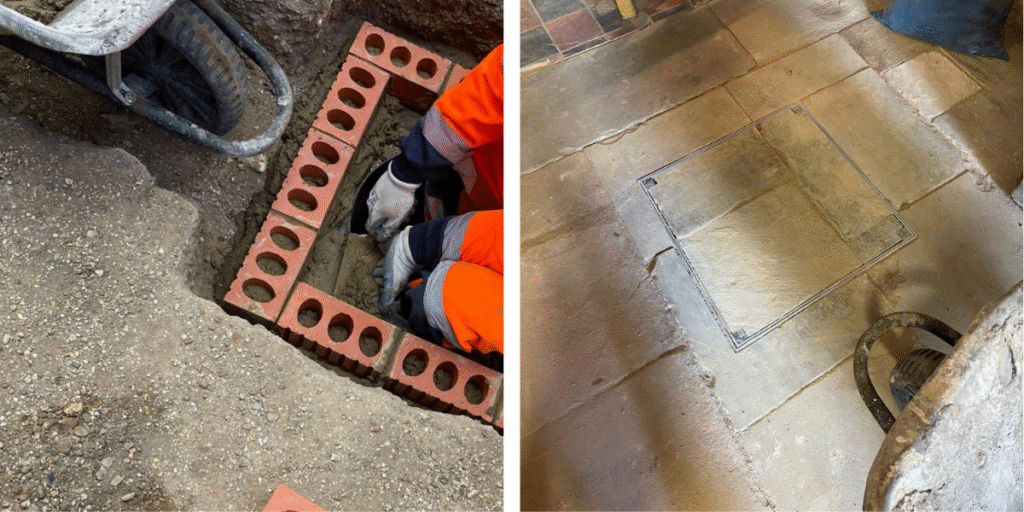
By combining careful planning, skilled workmanship, and respect for the site’s heritage, the project was completed safely, efficiently, and with minimal disruption to the church and surrounding grounds.
Don’t hesitate to contact us for more information on our services or to request a free quote. We’re here to help bring your projects to life.