
When carrying out civil engineering and groundworks, knowing what lies beneath the surface is just as important as understanding the work taking place above it. With underground utilities, drainage systems, electrical cables and other buried infrastructure often occupying the same space, choosing the right excavation method is essential.
Vacuum excavation offers a safer, more controlled and efficient alternative to conventional mechanical excavation and traditional hand digging in many situations. For projects involving existing underground services, restricted working areas or sensitive infrastructure, it can help reduce risks, minimise disruption and improve the quality of the finished work.
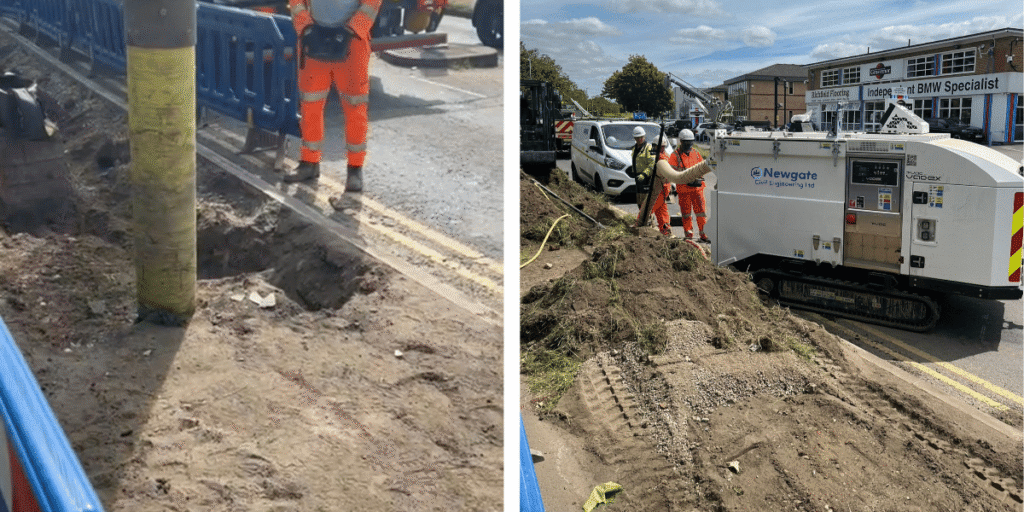
At Newgate Civil Engineering, selecting the right excavation method is an important consideration when planning and delivering civil engineering works safely and efficiently.
What Is Vacuum Excavation?
Vacuum excavation, also known as suction excavation, uses specialist equipment to loosen and remove soil from the ground using compressed air or water, before extracting the material through a powerful vacuum system into a collection tank.
Unlike a conventional excavator, which uses a bucket to break into and remove the ground, a vacuum excavator removes material in a controlled manner. This allows operatives to expose buried services and investigate underground conditions with greater precision.
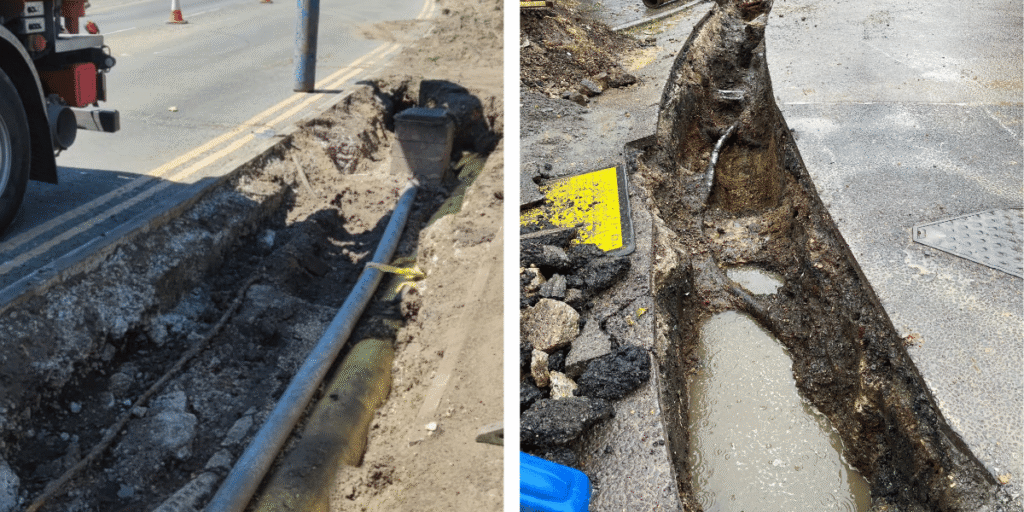
Vacuum excavation is particularly useful for:
- Exposing existing underground utilities before construction work begins.
- Installing or repairing electrical cables, ducting and street lighting infrastructure.
- Working around traffic signals, highway equipment and utility connections.
- Investigating drainage systems and locating buried assets.
- Excavating in confined spaces or areas with limited access.
- Supporting Section 278 highway works and other projects involving existing public infrastructure.
The method selected will always depend on the ground conditions, the type and location of the buried assets, site access and the requirements of the project.
Vacuum Excavation vs Conventional Excavators vs Hand Digging
Each excavation method has a place within civil engineering. The key is understanding where each offers the greatest benefit.
1. Vacuum Excavators
Vacuum excavation provides a controlled method of removing soil while reducing the need for direct mechanical contact with buried services.
Key benefits include:
- Reduced risk of service strikes: Controlled excavation can reduce the likelihood of damaging buried cables, pipes and other infrastructure when used as part of a properly planned safe-dig procedure.
- Greater precision: Soil can be removed in small, controlled quantities, helping operatives expose services without unnecessarily disturbing the surrounding ground.
- Improved productivity: Vacuum excavation can remove material more quickly than hand digging in suitable conditions, particularly when exposing longer runs of services or excavating multiple investigation points.
- Reduced physical effort: Less manual digging can reduce the physical demands placed on operatives.
- Cleaner working areas: Excavated spoil is collected within the machine’s tank, potentially reducing loose material around the excavation and helping with site housekeeping.
- Less disturbance to surrounding ground: Targeted excavation can reduce unnecessary damage to adjacent surfaces and infrastructure.
Vacuum excavation does require suitable equipment, trained operators and sufficient access. Its effectiveness can also vary depending on soil type, moisture content, excavation depth and the nature of the work.
2. Conventional Mechanical Excavation
Traditional excavators remain essential for many civil engineering and groundworks projects. They are particularly effective when removing large volumes of material, forming trenches, preparing foundations and carrying out bulk earthworks.
However, their buckets and attachments can cause significant damage if they strike underground services.
Mechanical excavation can also disturb a wider area than necessary when working around closely spaced utilities or sensitive infrastructure.
Conventional excavators are generally well suited to:
- Bulk excavation and earthmoving.
- Large drainage installations and trenching where the excavation method has been assessed as suitable.
- Formation of access roads, car parks and foundations.
- Removing substantial quantities of soil in open working areas.
Where buried services may be present, excavation must be carefully planned. This includes reviewing utility records, locating and marking services, using appropriate locating equipment and establishing a safe system of work. Mechanical excavation should not be used indiscriminately around unidentified or vulnerable services.
3. Traditional Hand Digging
Hand digging has long been used to expose underground services, particularly where greater control is required or mechanical excavation would present an unacceptable risk.
It remains an important technique, but it can be labour-intensive and time-consuming, especially where several services need to be exposed or longer sections of infrastructure must be investigated.
Hand digging can be appropriate for:
- Small excavations in restricted areas.
- Carefully exposing services where the risk assessment identifies it as suitable.
- Final excavation and trimming around sensitive infrastructure.
- Situations where vacuum excavation is impractical or unsuitable.
However, hand digging is not automatically risk-free. Incorrect tool use can damage buried services, while repetitive physical work can contribute to fatigue and musculoskeletal injuries. Operatives must also consider the risks associated with contaminated ground, sharp objects, unstable excavations and other site hazards.
Vacuum excavation can reduce the amount of manual digging required, although hand tools may still be needed to finish the excavation or undertake work that the vacuum equipment cannot safely perform.
Comparing the Three Methods
| Consideration | Vacuum Excavation | Conventional Excavator | Hand Digging |
| Precision around services | High when correctly operated | Lower close to services | High with suitable tools and technique |
| Risk of service damage | Can be reduced | Can be higher around buried services | Can still damage services |
| Bulk excavation | Generally, less suitable | Excellent | Poor |
| Productivity | Often effective for targeted excavation | Excellent for large volumes | Usually, slower |
| Manual physical effort | Generally reduced | Generally reduced | Higher |
| Access requirements | Requires space for specialist equipment and hoses | Requires suitable machine access | Can work in smaller spaces |
| Spoil handling | Collected in the tank | Usually requires separate handling or loading | Usually handled manually |
| Best application | Controlled excavation and service exposure | Bulk earthworks and suitable trenching | Small, precise excavations and finishing work |
No single method is best for every situation. A combination of vacuum excavation, mechanical excavation and hand digging may be the most appropriate solution for a project.
Improving Safety Around Underground Services
Striking an underground service can have serious consequences, including electric shock, burns, gas leaks, flooding, service disruption and costly project delays.
On highway schemes and utility-related projects, the consequences can extend beyond the immediate work area, affecting road users, residents, businesses and essential public services.
Vacuum excavation can help reduce these risks by allowing buried assets to be exposed in a more controlled way. However, it should form part of a wider safe-dig process rather than being treated as a substitute for proper planning.
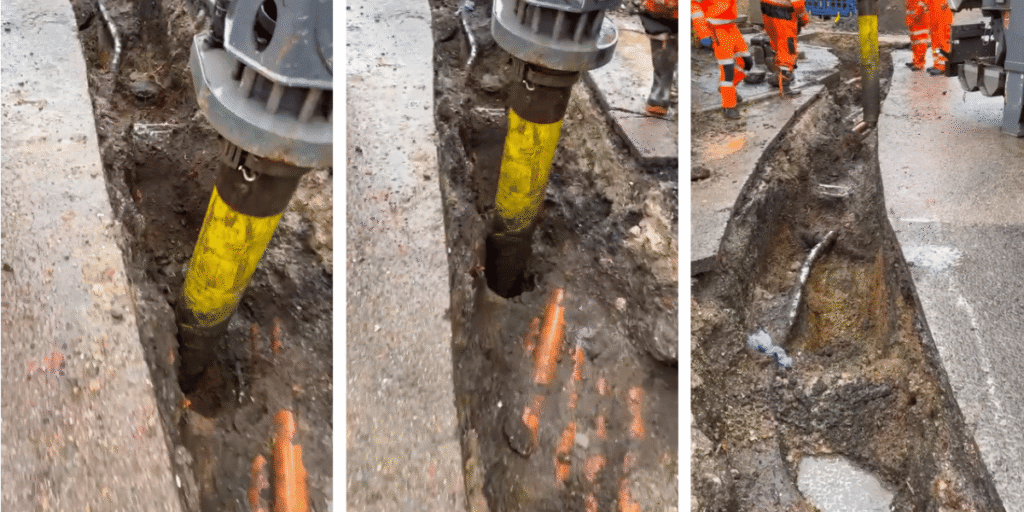
Before excavation begins, contractors should:
- Review available utility plans and site information.
- Locate and mark underground services using appropriate detection equipment.
- Assess ground conditions, site hazards and the proposed excavation method.
- Establish suitable exclusion zones and traffic management where required.
- Ensure plant and equipment are operated by competent personnel.
- Follow the relevant utility owner’s requirements and safe systems of work.
- Inspect the excavation and exposed services as work progresses.
Vacuum excavation can also introduce its own hazards, including high-pressure air or water, flying debris, noise, dust, hose movement and contact with exposed services. Appropriate equipment, training, risk assessments and control measures remain essential.
Reducing Disruption on Highway and Utility Projects
Working within the public highway often means operating in restricted spaces, close to live traffic, pedestrians, businesses and existing infrastructure.
Unplanned service damage can lead to emergency repairs, road closures, additional traffic management and delays to other trades.
By allowing targeted excavation, vacuum excavators can help limit unnecessary ground disturbance and support more controlled work around existing infrastructure. This is particularly beneficial when installing street lighting columns, traffic signal equipment, electrical ducting or other highway assets.
For Section 278 works, foul drainage and stormwater drainage where construction takes place on or around existing public highways, this approach can be especially valuable. Exposing services before installing new infrastructure helps contractors understand the conditions on site and make better-informed decisions before proceeding.
Although vacuum excavation may involve higher equipment hire or mobilisation costs than some conventional methods, these costs should be assessed against the potential savings associated with reduced manual labour, less reinstatement, fewer service strikes and improved programme reliability. Actual savings will depend on the site and scope of work.
Supporting Better Environmental and Site Management
Vacuum excavation can offer practical environmental and housekeeping advantages when used appropriately.
Because excavated material is collected within the machine, there may be less loose spoil around the work area. Targeted excavation can also reduce the amount of ground disturbed, potentially limiting unnecessary excavation and the quantity of material requiring handling.
However, the environmental benefits depend on the method used and the ground conditions. Vacuum excavation can consume fuel, generate noise and require the transport and disposal or treatment of collected material. Wet excavation methods can also produce slurry that needs suitable management.
Contractors should therefore consider waste classification, disposal requirements, water use, vehicle movements and the overall environmental impact when selecting their excavation method.
Is Vacuum Excavation More Cost-Effective?
The initial cost of vacuum excavation equipment or specialist hire can be higher than conventional excavation. However, the purchase price or hourly rate alone does not provide a complete picture of the cost of a project.
A more useful assessment considers the total cost of completing the work safely and efficiently, including:
- Labour and plant requirements.
- Excavation and spoil removal.
- Reinstatement of damaged surfaces.
- Traffic management and road occupancy.
- Programme delays and disruption to other activities.
- The potential cost and consequences of underground service damage.
Where work involves multiple utility crossings, sensitive infrastructure or congested underground services, vacuum excavation may offer better overall value.
For straightforward bulk earthworks, a conventional excavator will often remain the more economical option. The objective is to select the method that best suits the risks, ground conditions and project requirements.
Choosing the Right Excavation Method
Successful excavation starts with planning. The presence of underground services, soil conditions, required excavation dimensions, access constraints and project deadlines should all influence the approach.
Vacuum excavation is particularly valuable where accuracy and control are priorities. Conventional excavators remain highly effective for bulk material removal, while hand digging continues to have a role in small excavations and detailed finishing work.
In many cases, the best solution is a planned combination of methods, using each where it provides the greatest benefit.
How Newgate Civil Engineering Approaches Groundworks
At Newgate Civil Engineering, we understand the importance of careful planning, safe working practices and selecting suitable methods for civil engineering projects.
With experience across highway works, Section 278 schemes, drainage, street lighting and associated infrastructure, we recognise the challenges involved in working around existing underground services.
Choosing an appropriate excavation method can help protect buried assets, support efficient delivery and reduce unnecessary disruption to the surrounding area.
Whether a project involves installing new highway infrastructure, investigating existing services or carrying out groundworks in a congested environment, the right approach begins with understanding the site and planning the work accordingly.
Need support with an upcoming civil engineering or highway project? Contact Newgate Civil Engineering to discuss your groundworks requirements and the most suitable approach for your scheme.